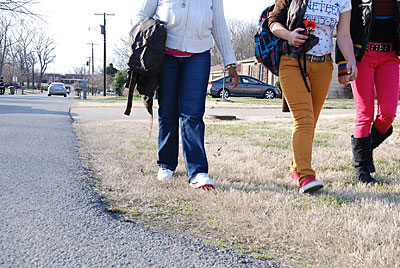
Rail-trail could reduce dependency on cars
By Nick Tabor, New Era Senior Staff Writer
Some
winter days, Jane Hall, 83, puts on long johns and a sweater and two coats
before going out. Ignoring the wind, she walks to the grocery store, Dollar
General, her bank or her doctor’s office.
Hall
walks everywhere. Her habits were forged in the 1930s and ‘40s, in rural parts
of the county, when the roads were dirt and mule-driven wagons were common.
Hopkinsville has sped up
around her. Now most streets are paved, have high speed limits and are mainly
for automobiles. She admits her routes are unsafe, as they lack sidewalks, but
she never learned to drive.
“People
just too lazy to walk,” she said in her living room. “They’d drive their cars
to the mailbox if they could.”
But
like most people, she takes infrastructure for granted.